
Friday, November 22, 2013
The Science of Destruction
The book Frankenstein so far has been focused on science. We can see Victor's obsession with understanding and learning everything he can about life and death. After he is creation of the monster we are forced to ask ourselves if we have gone too far. By creating this monster has he done something that cannot be retracted and will lead to unimaginable horrors.
 We have made this mistake before in the exploration of science and the creation of explosives. During World War 2 we created and dropped the first dirty bomb. The Japanese Minister of War pushed for the soldiers to continue fighting, but the Emperor of Japan overruled him saying that Americans have used the first "Cruel Bomb." In a video on youtube by Vsauce he describes how horrible atomic weapons are.
According to the pop culture idea of Frankenstein the monster, Adam, is considered a thoughtless killing machine that just terrorizes villages and attacks everyone it meets. This story was written long before the first "cruel bomb" and obviously before WWII, but Frankenstein seems to be their version of the ultimate weapon. Both of these abominations were created in pursuit of pure science, but they ended up causing massive damage. From what we've read so far we can see that the monster is nothing like what we have all seen from the movies, but it may have been adapted to be like that as a commentary on how science can not be separated from what it creates. It can be seen that Dr. Frankenstein is just trying to pursue the creation of life, and not making a monster, but that is what results. The scientists leading the project on the Atomic Bomb were just creating a way to produce large quantities of energy, but it ended up being turned into a weapon. Just because the scientific work was done for the sole purpose of scientific exploration it's consequences cannot be excused.

Friday, November 15, 2013
Psychopaths on the Moors
Psychopathy is a mental illness that
has been most recently characterized by a general lack on empathy for
other humans. This may be counter-intuitive to the view that many
people have of psychopaths, which is generally that they are those
people that intentionally harm others for the pleasure of it. But
this is not the case. One percent of our current population is most
probably psychopathic, and while this concentration jumps to 33
percent in our prison population, it does not account for the
entirety of the psychopathic population. The rest of this subset
concentrates in areas of business and media that require the ability
to make decisions that could destroy the lives of other people, a
spot light or that involve control over a large group of people, such
as cooperate executives, media, the political arena, and even clergy,
which spike at ranges of four percent to 15 percent.
This is because psychopathy is a
illness that is related with either the inability to empathize with
other human beings, thus making it easier to manipulate or harm
others that are simply seen as obstacles, which is where we see many
of the violent psychopaths. Or to control and compensate for their
lack of empathy so that they may put on a front for the whole of
society, which is many “victim” psychopaths and manipulators come
from.
Now, what does this have to do with
Wuthering heights? Well, many of the characters in the novel
displayed psychopathic tendencies, and together they covered a wide
spectrum of psychopathy. Heathcliff took the role of what we think
of as the traditional psychopath, violent, manipulative, and
generally apathetic to the feelings of others. Catherine Earnshaw and
Linton took on the more manipulative mentality that fed off of the
kindness of others to get what they wanted and then discarded them.
But my fascination in this book is not with the characters, it is
with the author that imagined these characters without meeting more
than a few dozen people in her entire life. The fact that Emily
Bronte was able to recreate the spectrum of psychopathy with her
characters suggests that many people around her displayed similar
tendencies, or that even she herself was a psychopath. This would
mean that the area that Emily lived in would have had a psychopathy
rate somewhere between law school and prison, which is an interesting
scale in its own right. It is not hard to imagine that a person
capable of creating such characters must project themselves onto the
page as well, but it is an interesting prospect none the less.
Monday, October 28, 2013
Cat's Cradle
It seems like we accidentally missed a blog post last week,
so I’m here to remedy that. In class, we all have our independent reading
books, and I read Cat’s Cradle by Kurt Vonnegut.

Seen above is a picture of a Cat’s Cradle, which is
referenced several times throughout the book, and also in the title. It clearly
does not look like a cat sitting in a cradle, it’s just string twisted in such
a way that we can say that it kind of
looks like a cradle. The use this as a metaphor for how we as people tell
ourselves foma, or harmless untruths,
in order to make our lives more bearable. I agree that people do this to some
degree, but in the book it is a bit over exaggerated. The book applies the
concept to everything in the world, while I believe it only applies to certain
things. But people definitely do it. We all have a habit of rationalizing things
in our mind so that we can stop dwelling on something, or so that we can stop
feeling guilty about something. I enjoyed Cat’s Cradle very much, even if it
was a bit odd.

Saturday, October 26, 2013
A Game of Wuthering Thrones
In class we have been reading Wuthering Heights,
which I have not enjoyed. It is definitely well written, but I am simply unable
to get into it, and the reading has gone very slowly for me. However, recent
events in the book have made it more exciting for me. People are starting to
die. Now, I realize that this sounds morbid, but you must admit it always makes
it more interesting. With the amount of characters in this book suddenly dying
it made me think of one of my favorite book series. A Song of Ice and Fire,
more commonly referred to as A Game of Thrones.
One of the most commonly told jokes about this series is
simply “Everyone dies.” This is just referencing the very large amount of main
characters who die in this series. The character who you would least expect to
die, dies. I thought this was like Wuthering Heights because a large amount of
the characters you were introduced to at the beginning of the story are
suddenly dying, such as Hindley, Catherine, and Isabella. These are a few
characters I wouldn’t have expected to die for a few reasons. Hindley and
Catherine because they seemed too important to the story to die halfway through,
and Isabella because she had not contributed enough to the story so far. So,
while Game of Thrones is very different from Wuthering Heights, the unexpected
and gratuitous deaths in both led me to relate themselves to each other in my
mind.

Sunday, October 6, 2013
Books and Bombs
This past week in class we have spent a lot of time focusing on our paper defining what literature is to us. Everyone has a different view point on what actually is literature. Must it be only words, is a T.V. or movie script literature, or is even the T.V. show or movie itself literature. Literature is a very broad topic that I like to think of as anything with artistic qualities and it has to use written words. I actually find this to compare very closely to varying types of explosives.

People use the word bomb to encompass everything that goes boom and is designed to hurt people. I choose a broader range, anything that explodes, releases an incendiary, or gas activated by a trigger mechanism. We can think of different types of literature subdividing like types of bombs. Some are very powerful stories that fly by in a second but they leave a lasting impact. This what we consider to be many of the great works of literature. They are usually big thick books that feel like you're carrying around a ton of bricks. These books are the old classics that just carry a lot of weight and description, and ideas in them. We can also see the same evolution of books as we can explosives. First the big powerful bombs just meant to tear everything apart, and then the incendiary which are quick burning fast paced and exciting. That is what the next era of great literature became. From the big dense books came more exhilarating faster paced books that keep your attention much better. These still continue and have become a mainstay of writing nowadays, but there are also the books that deal with deeper issues. These books like gas focus on your brain. These kinds of books are for a different kind of pleasure, one that causes you to think about real things. It's more than just trying to figure out a mystery novel; the fun is in seeing the problems we face in reality and trying to thin of ways to fix those. Literature and bombs are more closely related than you would think.

Friday, September 27, 2013
Borderland Gooseberries
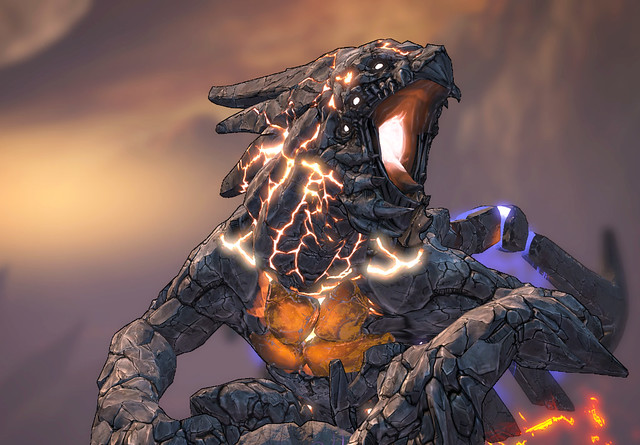
For one of our reading assignments this week, we were supposed to analyze the story "Gooseberries" by Anton Checkhov for theme. In the story we encounter a man by the name Nicholai Ivanich, who works his entire life to achieve his goal only to find that it was not as satisfying as he had believed it to be. After reading this I could not help but make plot comparisons to one of my favorite game series Borderlands.


The short version of both of these incredibly long games is that you are in a futuristic society that has come across a baron planet named Pandora. On Pandora there it was rumored that their was a secret vault that would give whoever opened it immense fame, power in wealth. You start the game as one of the four vault hunters on the left (I always choose Siren) and work with the help of an AI named Angel to find and open the vault. At the end, you find and open the vault, but a giant monster that you have to immediately kill comes out and tries to eat you instead of the miles of gold you were imagining. The second game picks up some time after this with the same basic premise, but instead you are preventing the antagonist of the story, Handsome Jack, from opening the vault first. The game once again, takes forever to complete and you are finally able to open this second vault, but Handsome Jack opens it first and you have to deal with yet another monster that appears from the vault. This time the vault yields its riches, but you later discover that there are many more vaults in the galaxy you inhabit and are once again left disappointed with all of the hours you have just spent, and I can only guess that the third game will pick up somewhere from there. And yes, that was the short version.

Thursday, September 19, 2013
Written By: Evan
For homework tonight we were told to read A Good Man Is
Hard to Find by Flannery O’Connor. Upon hearing the title I initially
assumed that it would be a story about a woman who is either searching for a
husband or dealing with an abusive or possibly emotionally detached husband. I
incorrectly thought that it would be a mostly innocent story, if a little sad
with it possibly ended in divorce or a breakup. But no, the story went in a
completely different direction than expected, with the “Good Man” in the title
being someone that is not a criminal, a liar, or a cheat.

While
the grandmother was in no way the narrator of the story, I came to see her in a
similar light, as she was the most active presence in the story. She had
thoughts about everything that occurred and didn’t mind making her opinion
know. She also seemed to be the sort that was raised with extremely good
manners and liked to see others use them as well. All that being said, I was
horrified by what occurred with “The Misfit” and how the family that was
involved was just in the wrong place at the wrong time. I think it affected
even more because I was going into it with such innocent assumptions as to what
the story would contain.
It’s
usually sad to see anyone die in a story (unless of course it is the antagonist
and even then it’s not always so black and white) but seeing the children die
is even worse. Especially considering the innocent way they had been acting for
the entire story. There is a lot of shock value in this story due innocence
being met with cold cruelty. This terrible events never would have happened if
the grandmother hadn’t tried to go the house, or if she had remembered
correctly where the house was actually located at, or if she hadn’t brought the
cat along. I also thought that the fact that the husband and son were clearly
just murdered, the wife did not seem to realize this and she just went along
with the goons (is that politically correct? Should we call them Henchmen?
Henchpeople?) when it was time for
her and the daughter to die.

All in
all, this story was very sad and very horrifying just because of the unexpected
events and the way the innocence of all the characters meets as abrupt an end
as the characters themselves do. We can read or watch all sorts of stories
where terrible things happen to people without batting an eye, which is why
there are so many different variations on CSI and CSI-like shows. But we go
into those stories expecting bad things to happen, but in this story our
intentions are not met and therefore, we are horrified.
Subscribe to:
Posts (Atom)