Friday, December 6, 2013

A Race of Daemons

This is the week which we finally finished Frankenstein by Mary Shelly. The book ended rather anticlimactically, with the sudden death of Frankenstein, but only after he swore that he would hunt and kill the monster he created. But this outcome was only a result of his refusal to make a female mate for the original monster, due to a fear of creating a master race of these daemons that would cause humanity to curse the name Frankenstein for all eternity. And to see Dr. Frankenstein's fears played out on a slightly modified scale and setting, we only need to look at the Super Mutants of the Fallout series.


The Fallout series depicts a post apocalyptic world that was completely decimated by a global thermonuclear war in which every country seemed to have a "scorched earth" policy. But in anticipation of this war, the US constructed underground habitats that would house citizens selected to carry on either individual characteristics of the human condition, some piece of technology or to continue a science experiment. One such vault was vault 87, the home of the species know colloquially as the "Super Mutants".


Vault 87 was responsible for the continuation of research into Forced Evolutionary Viruses (FEVs) that were designed, much like Frankenstein's monster, to be a better class of human so that the human race would stand a chance in the world after the war. This is not what happens, at least not immediately. There is an accident in one of the FEV strains and it cause many of the subjects to mutate into these tall yellow creatures with super human strength and limited mental faculties, with the population having varying levels of both. Some subject retain their cognitive abilities, while others grow to the size of buildings and kill anything that doesn't look like them. After vault 87 is opened these monsters essentially have free reign over the landscape as they are also not effected by lingering radioactivity and destroy and mutilate much of the human population that created them, and had their fair share of murder and other things you'll have to play the games to find out. Which would confirm Frankenstein's rational behind not giving the monster a companion. However, it is discovered later in the game that the FEV strain has been corrected by a group known as the "Enclave", and it aids in the creation of super humans. But this raises a more interesting question. Had Frankenstein continued his work, instead of giving up, could he have succeeded in his goal; or would he be forever doomed to failure?

Friday, November 22, 2013

The Science of Destruction

The book Frankenstein so far has been focused on science. We can see Victor's obsession with understanding and learning everything he can about life and death. After he is creation of the monster we are forced to ask ourselves if we have gone too far. By creating this monster has he done something that cannot be retracted and will lead to unimaginable horrors.
We have made this mistake before in the exploration of science and the creation of explosives. During World War 2 we created and dropped the first dirty bomb. The Japanese Minister of War pushed for the soldiers to continue fighting, but the Emperor of Japan overruled him saying that Americans have used the first "Cruel Bomb." In a video on youtube by Vsauce he describes how horrible atomic weapons are.
According to the pop culture idea of Frankenstein the monster, Adam, is considered a thoughtless killing machine that just terrorizes villages and attacks everyone it meets. This story was written long before the first "cruel bomb" and obviously before WWII, but Frankenstein seems to be their version of the ultimate weapon. Both of these abominations were created in pursuit of pure science, but they ended up causing massive damage. From what we've read so far we can see that the monster is nothing like what we have all seen from the movies, but it may have been adapted to be like that as a commentary on how science can not be separated from what it creates. It can be seen that Dr. Frankenstein is just trying to pursue the creation of life, and not making a monster, but that is what results. The scientists leading the project on the Atomic Bomb were just creating a way to produce large quantities of energy, but it ended up being turned into a weapon. Just because the scientific work was done for the sole purpose of scientific exploration it's consequences cannot be excused.

Friday, November 15, 2013

Psychopaths on the Moors

   Psychopathy is a mental illness that has been most recently characterized by a general lack on empathy for other humans. This may be counter-intuitive to the view that many people have of psychopaths, which is generally that they are those people that intentionally harm others for the pleasure of it. But this is not the case. One percent of our current population is most probably psychopathic, and while this concentration jumps to 33 percent in our prison population, it does not account for the entirety of the psychopathic population. The rest of this subset concentrates in areas of business and media that require the ability to make decisions that could destroy the lives of other people, a spot light or that involve control over a large group of people, such as cooperate executives, media, the political arena, and even clergy, which spike at ranges of four percent to 15 percent.


   This is because psychopathy is a illness that is related with either the inability to empathize with other human beings, thus making it easier to manipulate or harm others that are simply seen as obstacles, which is where we see many of the violent psychopaths. Or to control and compensate for their lack of empathy so that they may put on a front for the whole of society, which is many “victim” psychopaths and manipulators come from.


   Now, what does this have to do with Wuthering heights? Well, many of the characters in the novel displayed psychopathic tendencies, and together they covered a wide spectrum of psychopathy. Heathcliff took the role of what we think of as the traditional psychopath, violent, manipulative, and generally apathetic to the feelings of others. Catherine Earnshaw and Linton took on the more manipulative mentality that fed off of the kindness of others to get what they wanted and then discarded them. But my fascination in this book is not with the characters, it is with the author that imagined these characters without meeting more than a few dozen people in her entire life. The fact that Emily Bronte was able to recreate the spectrum of psychopathy with her characters suggests that many people around her displayed similar tendencies, or that even she herself was a psychopath. This would mean that the area that Emily lived in would have had a psychopathy rate somewhere between law school and prison, which is an interesting scale in its own right. It is not hard to imagine that a person capable of creating such characters must project themselves onto the page as well, but it is an interesting prospect none the less.

Monday, October 28, 2013

Cat's Cradle

It seems like we accidentally missed a blog post last week, so I’m here to remedy that. In class, we all have our independent reading books, and I read Cat’s Cradle by Kurt Vonnegut.
Seen above is a picture of a Cat’s Cradle, which is referenced several times throughout the book, and also in the title. It clearly does not look like a cat sitting in a cradle, it’s just string twisted in such a way that we can say that it kind of looks like a cradle. The use this as a metaphor for how we as people tell ourselves foma, or harmless untruths, in order to make our lives more bearable. I agree that people do this to some degree, but in the book it is a bit over exaggerated. The book applies the concept to everything in the world, while I believe it only applies to certain things. But people definitely do it. We all have a habit of rationalizing things in our mind so that we can stop dwelling on something, or so that we can stop feeling guilty about something. I enjoyed Cat’s Cradle very much, even if it was a bit odd.

Saturday, October 26, 2013

A Game of Wuthering Thrones


In class we have been reading Wuthering Heights, which I have not enjoyed. It is definitely well written, but I am simply unable to get into it, and the reading has gone very slowly for me. However, recent events in the book have made it more exciting for me. People are starting to die. Now, I realize that this sounds morbid, but you must admit it always makes it more interesting. With the amount of characters in this book suddenly dying it made me think of one of my favorite book series. A Song of Ice and Fire, more commonly referred to as A Game of Thrones.
One of the most commonly told jokes about this series is simply “Everyone dies.” This is just referencing the very large amount of main characters who die in this series. The character who you would least expect to die, dies. I thought this was like Wuthering Heights because a large amount of the characters you were introduced to at the beginning of the story are suddenly dying, such as Hindley, Catherine, and Isabella. These are a few characters I wouldn’t have expected to die for a few reasons. Hindley and Catherine because they seemed too important to the story to die halfway through, and Isabella because she had not contributed enough to the story so far. So, while Game of Thrones is very different from Wuthering Heights, the unexpected and gratuitous deaths in both led me to relate themselves to each other in my mind.

Sunday, October 6, 2013

Books and Bombs


This past week in class we have spent a lot of time focusing on our paper defining what literature is to us. Everyone has a different view point on what actually is literature. Must it be only words, is a T.V. or movie script literature, or is even the T.V. show or movie itself literature. Literature is a very broad topic that I like to think of as anything with artistic qualities and it has to use written words. I actually find this to compare very closely to varying types of explosives.


People use the word bomb to encompass everything that goes boom and is designed to hurt people. I choose a broader range, anything that explodes, releases an incendiary, or gas activated by a trigger mechanism. We can think of different types of literature subdividing like types of bombs. Some are very powerful stories that fly by in a second but they leave a lasting impact. This what we consider to be many of the great works of literature. They are usually big thick books that feel like you're carrying around a ton of bricks. These books are the old classics that just carry a lot of weight and description, and ideas in them. We can also see the same evolution of books as we can explosives. First the big powerful bombs just meant to tear everything apart, and then the incendiary which are quick burning fast paced and exciting. That is what the next era of great literature became. From the big dense books came more exhilarating faster paced books that keep your attention much better. These still continue and have become a mainstay of writing nowadays, but there are also the books that deal with deeper issues. These books like gas focus on your brain. These kinds of books are for a different kind of pleasure, one that causes you to think about real things. It's more than just trying to figure out a mystery novel; the fun is in seeing the problems we face in reality and trying to thin of ways to fix those. Literature and bombs are more closely related than you would think.

Friday, September 27, 2013

Borderland Gooseberries


For one of our reading assignments this week, we were supposed to analyze the story "Gooseberries" by Anton Checkhov for theme. In the story we encounter a man by the name Nicholai Ivanich, who works his entire life to achieve his goal only to find that it was not as satisfying as he had believed it to be. After reading this I could not help but make plot comparisons to one of my favorite game series Borderlands.


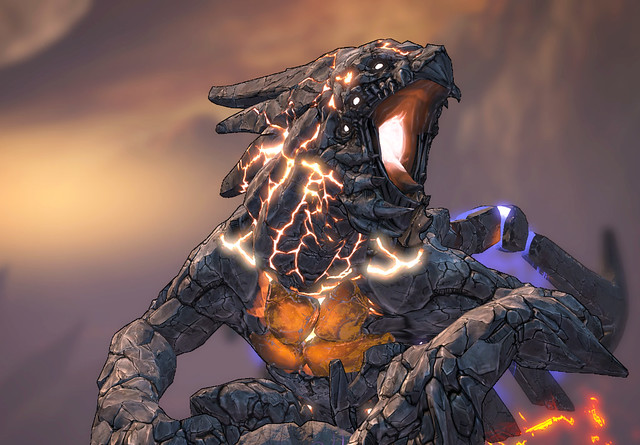
The short version of both of these incredibly long games is that you are in a futuristic society that has come across a baron planet named Pandora. On Pandora there it was rumored that their was a secret vault that would give whoever opened it immense fame, power in wealth. You start the game as one of the four vault hunters on the left (I always choose Siren) and work with the help of an AI named Angel to find and open the vault. At the end, you find and open the vault, but a giant monster that you have to immediately kill comes out and tries to eat you instead of the miles of gold you were imagining. The second game picks up some time after this with the same basic premise, but instead you are preventing the antagonist of the story, Handsome Jack, from opening the vault first. The game once again, takes forever to complete and you are finally able to open this second vault, but Handsome Jack opens it first and you have to deal with yet another monster that appears from the vault. This time the vault yields its riches, but you later discover that there are many more vaults in the galaxy you inhabit and are once again left disappointed with all of the hours you have just spent, and I can only guess that the third game will pick up somewhere from there. And yes, that was the short version.


Just from this description it seems that the two plot lines have very similar features, the character has a goal that no one can stop them from achieving, this passion drives them to devote their entire life to the project, and depending on how much you invest much of yours as well. And after gaining a considerable amount of wealth they are finally gifted with what they have spend the better part of their life chasing, only to find that what they wanted was not actually what they would have. With this plot from Gooseberries, along with a heavy handed statement, we can pull that there are very few people that ever actually achieve happiness and that the life long pursuit of an ideal is a gamble at best. While this same theme can be had for the plot of the entire Borderlands series, I think that it can also be shown that the continuous pursuit of such an ideal will most often lead to more work to be done to reach something that proves to be increasingly unobtainable.